Cerro Tusa · Jul 6, 2026
Cerro Tusa
In short
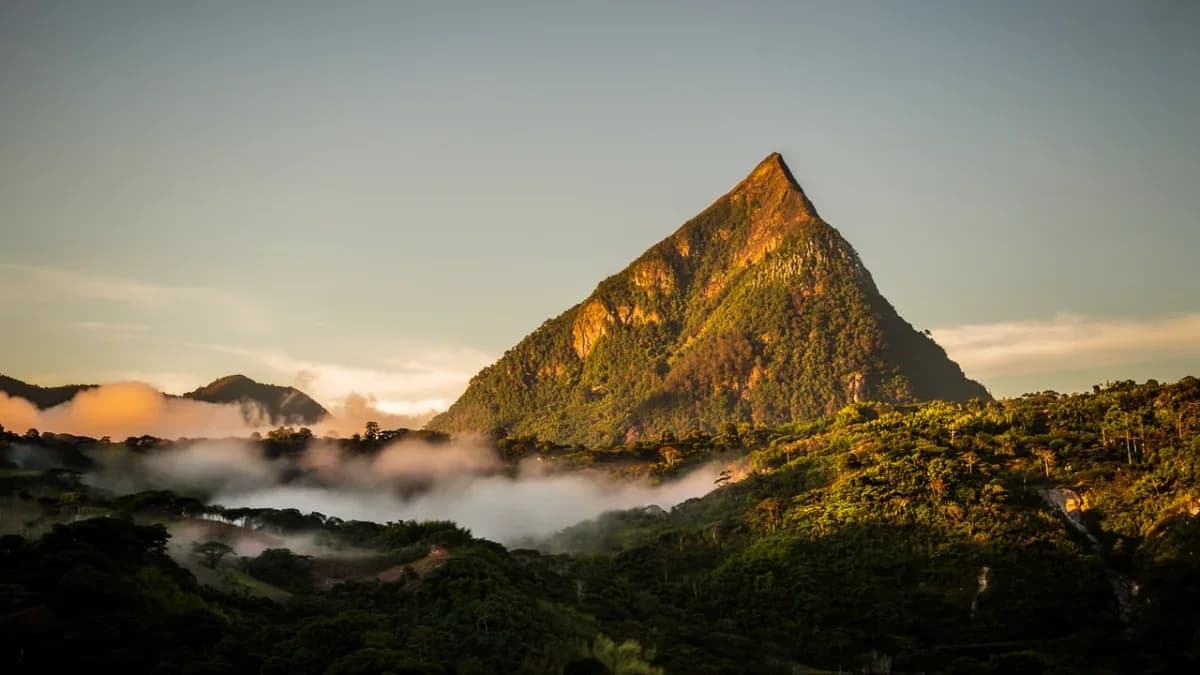
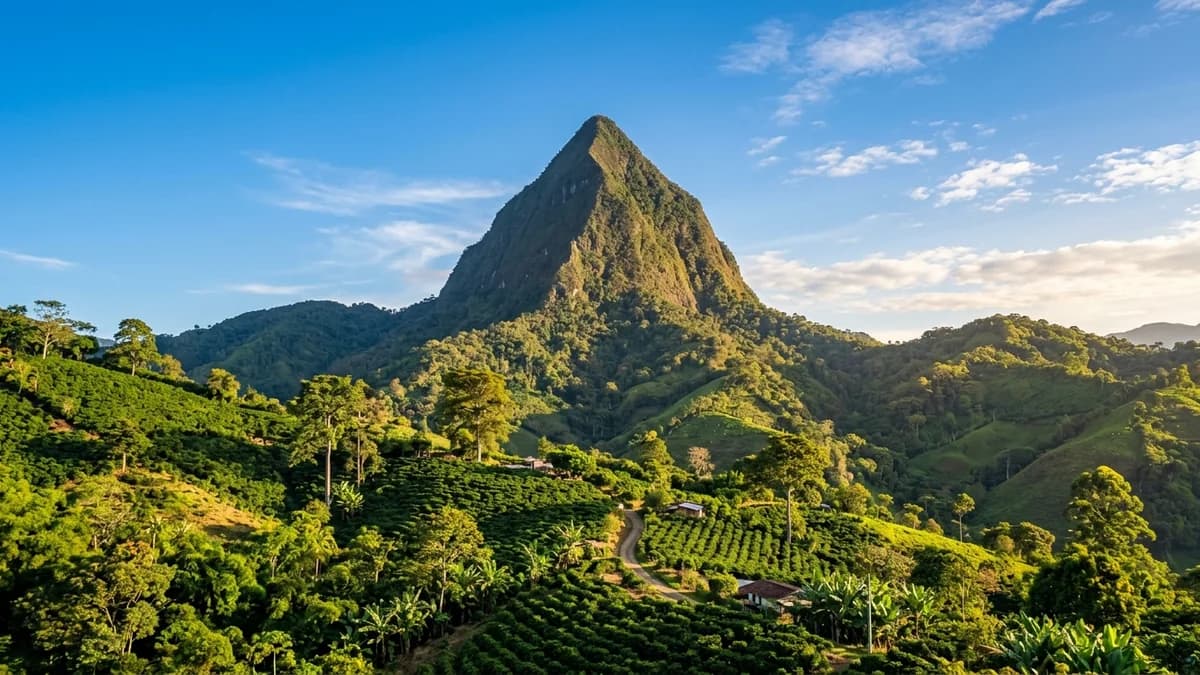
Rising with arresting mathematical precision above the coffee plantations of southwestern Antioquia stands one of the most astonishing geological wonders on Earth.
It was not engineered by pharaohs nor sculpted by human hands. It was carved by the ancient volcanic forces of the planet: Cerro Tusa, celebrated worldwide as the largest natural pyramid in the world.
With a summit at 1,950 meters (6,400 feet) above sea level and a sheer vertical relief of nearly 600 meters, this monumental peak is both an archaeological sanctuary and a coveted mountaineering milestone.
To comprehend its geometric symmetry, we must journey millions of years back to the Tertiary period.
Cerro Tusa is not a standard folded mountain range; it is a volcanic neck or plug—dense andesitic magma that cooled and solidified within the vent of an extinct volcano.
Across geological epochs, torrential rains and winds from the Cauca River canyon eroded the softer surrounding sedimentary layers. This exposed the resilient tetrahedral core, casting clean triangular shadows over the valley as the sun sets over the Andes.
Geologists and international travelers travel to Colombia drawn by its uncanny resemblance to the pyramids of Giza or Teotihuacan, yet on a much grander natural scale and cloaked entirely in emerald cloud forest and high-altitude grasses.
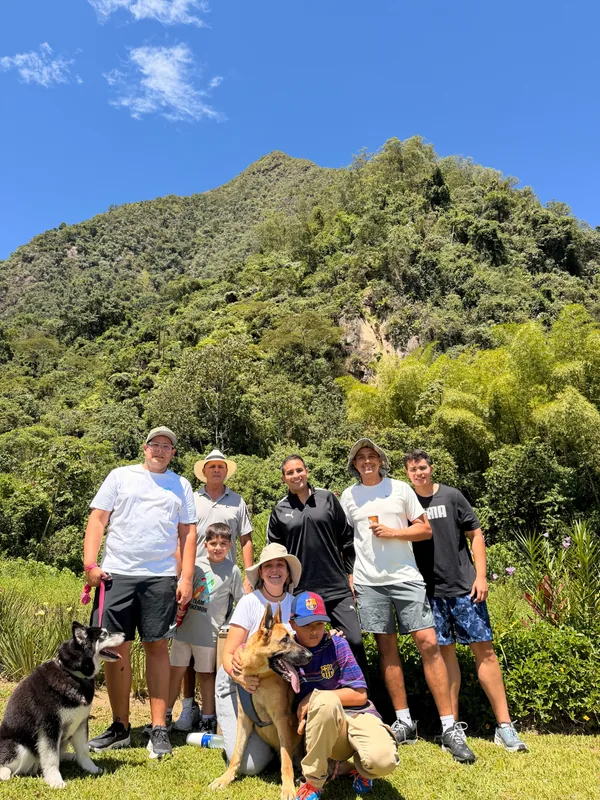 Family and visitors with their dogs enjoying a sunny day at the foot of Cerro Tusa
Centuries before European explorers arrived, the valley of Venecia was home to the Zenúfana people, an advanced Carib-speaking indigenous culture who revered the mountain as the pillar uniting heaven and earth.
To the Zenúfanas, the pyramid was the dwelling place of their tutelary deities:
Exploring these forests reveals the deep spiritual bond ancestral peoples maintained with this peak. Read more in our guide on what to do in Venecia Antioquia.
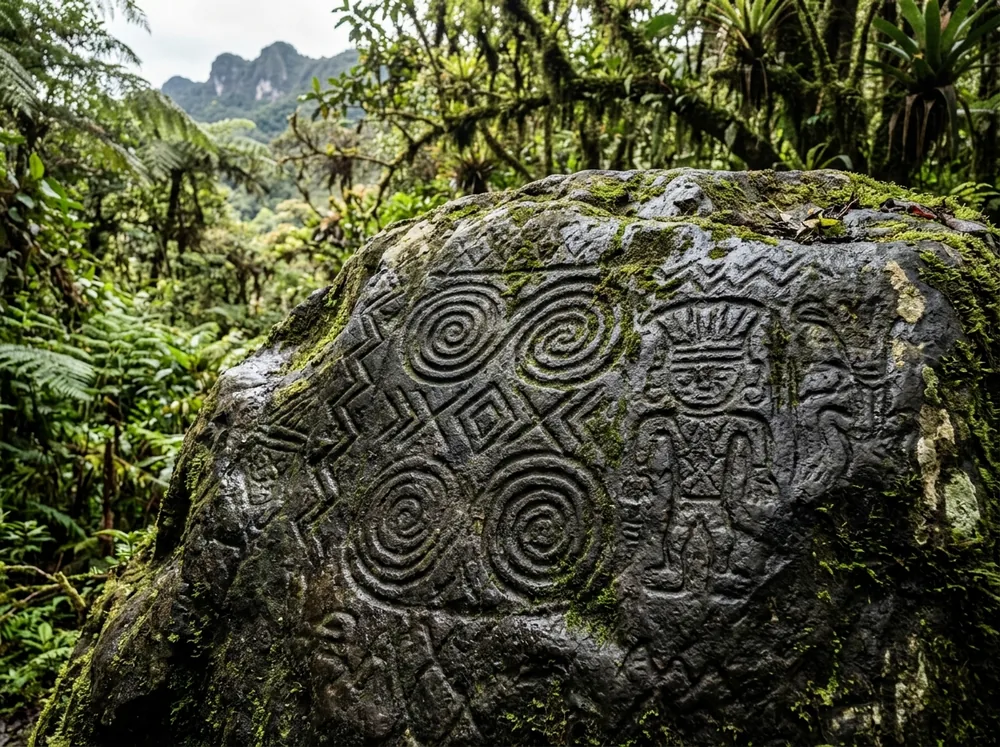 Sacred petroglyphs and archaeological vestiges of the Zenúfana indigenous culture at Cerro Tusa
Reaching the summit of Cerro Tusa is one of the most respected trekking feats in Colombia.
While its absolute elevation is moderate, the climb presents relentless verticality:
Climbing must be conducted with certified native mountain guides, such as our trusted partners at Al Parche Venecia.
[!tip] Secret Tip • La Juana: If you want to experience the sacred archaeology without tackling the demanding summit climb, view the western face between 6:30 a.m. and 7:15 a.m. During this brief window, low morning sunbeams highlight the rock-carved Face of the Goddess with striking clarity.
An early morning departure avoids the intense midday equatorial heat and ensures you reach the top before afternoon clouds form. At the pinnacle, hikers enjoy an awe-inspiring 360-degree panorama spanning the Farallones del Citará and the Cauca River canyon.
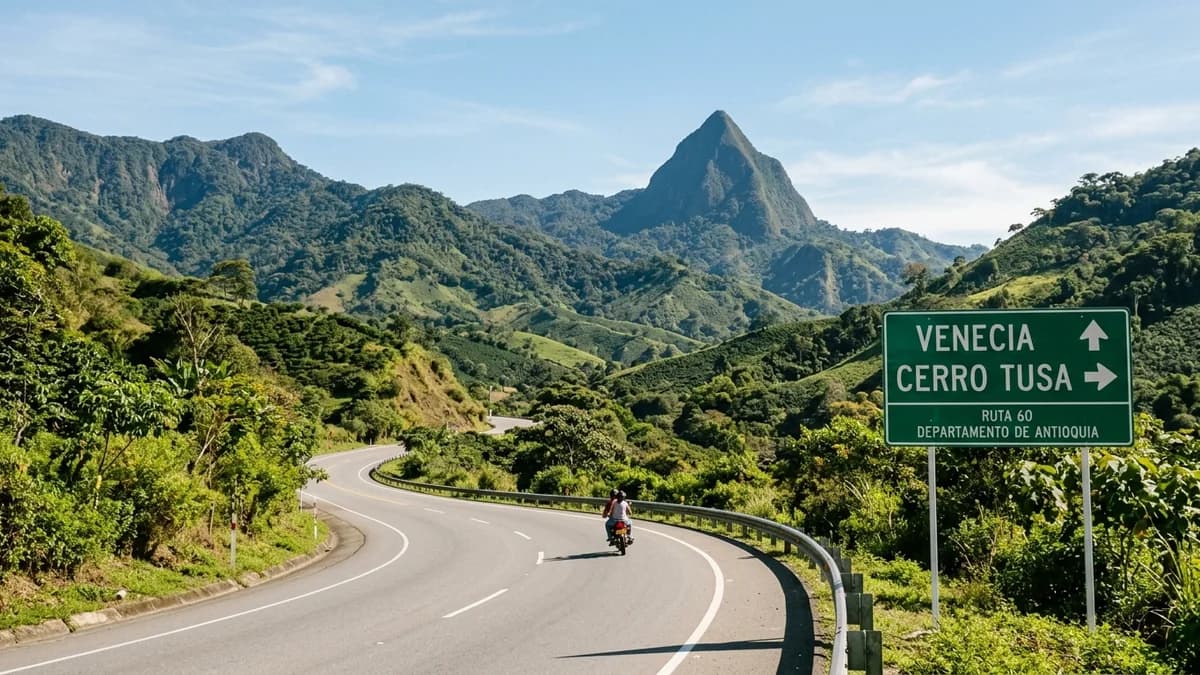
For full transit details from the capital, consult our step-by-step route guide on how to get to Cerro Tusa from Medellín in 2026.
Not all travelers desire an extreme physical climb; for many, the true joy lies in contemplating the mountain's grandeur in serene privacy.
La Juana Cerro Tusa is located in Parcelación Rochiles, just five minutes from the park entrance. Designed for exclusive single-party rentals (hosting up to 16 guests across 6 private suites), the estate delivers unobstructed views of the natural pyramid:
This setting bridges authentic wilderness exploration with the amenities of a premier luxury finca in Antioquia.
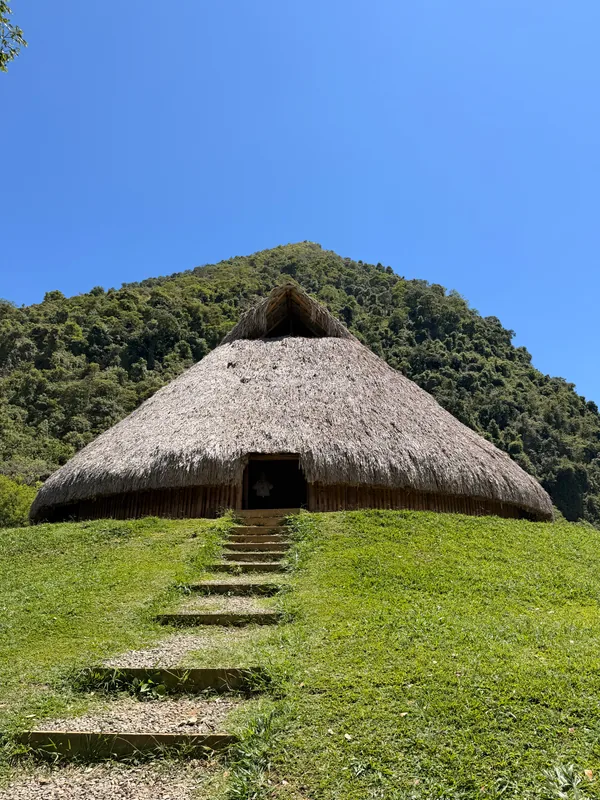 Ancestral ceremonial maloka with thatched roof at Parque Comfama Cerro Tusa, 5 minutes from La Juana estate
Cerro Tusa, the largest natural pyramid in the world, is an irreplaceable geological monument uniting pre-Columbian mysticism, volcanic majesty, and mountain adventure.
Staying in its shadow at La Juana transforms your journey into a restorative connection with the heritage of Antioquia.
To arrange your private stay, explore our rooms and accommodations overview or reach out via WhatsApp for guide bookings and itinerary assistance.
Notice on rates: Tour and accommodation pricing is informational and subject to seasonal adjustments and guide availability. Notice on images: Photographs and renderings are illustrative, designed to evoke the sensory experience and natural grandeur of the region at La Juana Cerro Tusa.
Frequently asked questions
Due to its nearly symmetrical conical geometry formed by volcanic activity millions of years ago. At 1,950 meters above sea level with 600 meters of freestanding vertical relief, it surpasses any other isolated natural pyramid on Earth.
Direct Inquiry
Inquire directly with our team for exclusive rates and availability with no middlemen.
by Valentina Restrepo
La Juana Cerro Tusa · Venecia, Antioquia